

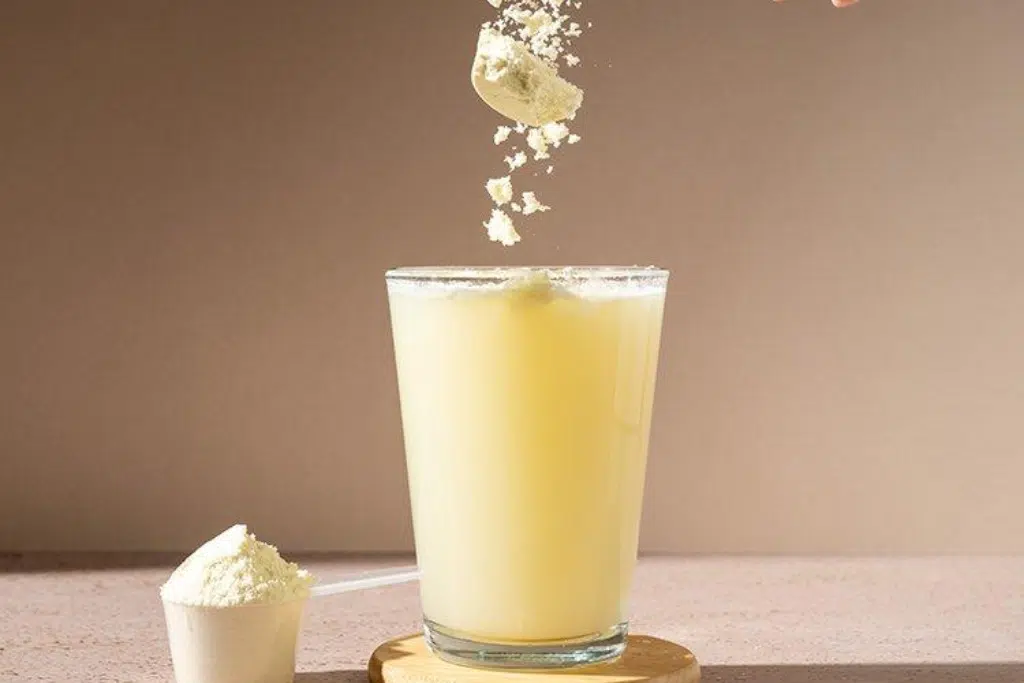
Pea protein is used in shakes, meal replacements, plant-based milk and ready-to-drink nutrition products. Common problems include clumps, sediment, excess thickness and a gritty or powdery feel. Mixing alone rarely solves them.
What affects pea protein solubility?
Pea protein solubility depends on pH, water temperature, hydration time, protein level and mixing conditions. Sugar, minerals, fat, fibre and stabilizers can also affect how the protein behaves.
Pea protein tends to form aggregates near its isoelectric region. A higher protein level can increase thickness, sediment and grittiness. Moderate water temperature and enough hydration time may help dispersion, while too much heat can promote aggregation.
Test the protein in the full recipe under the intended processing conditions, not only in water.
Why does pea protein settle?
Sedimentation commonly results from incomplete hydration, protein aggregation, unsuitable protein functionality or insufficient suspension stability.
Some particles may not be fully hydrated even when the drink looks well mixed. pH, minerals and heat can make small particles join into larger aggregates. Some pea protein grades are designed for water binding, viscosity control or structural applications rather than low-viscosity beverages.
A protein may perform well before heating but aggregate after pasteurization or UHT processing. Evaluate stability before and after the intended commercial heat treatment.
Improving solubility and stability
Several formulation and processing adjustments can help reduce common beverage problems. Review hydration time and temperature, the order of ingredient addition, pH, homogenization conditions and the stabilizer system together.
Select a grade matched to the target viscosity and protein level. If sediment appears only after storage, check whether the suspension system is appropriate for the particle size and density of the protein.
Choosing the right HYDROPEA® grade
HYDROPEA® pea protein and peptide grades cover different beverage and nutrition applications. Low-viscosity beverage concepts need a different grade from products where water binding or texture is the objective.
WHUCHEM can provide grade-specific specifications and samples. Run a pilot batch with the full recipe and the intended heat process before finalizing the protein grade and dosage.
Need a grade or specification?
Send us the product name, CAS number and target application. Our team will confirm the suitable grade and provide TDS, SDS and COA documentation.